The Cyber Resilience Act and your AI vendor
Software manufacturers already have to report actively exploited vulnerabilities, and soon the rest of the regulation applies. If you are buying an AI tool, it gives you good questions to ask.
 iSearch
Contents
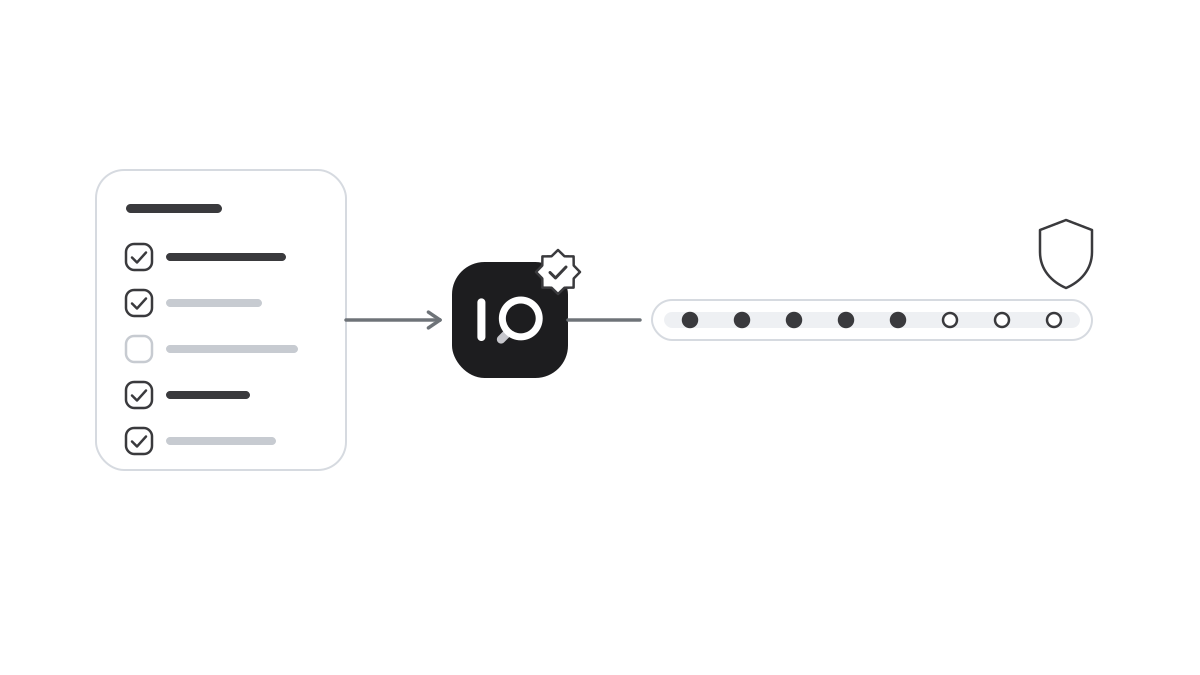
The EU Cyber Resilience Act sets security requirements for products with digital elements, from connected devices to software. The requirements are aimed mainly at manufacturers. For anyone buying software, such as an AI tool, the regulation is still useful. It describes what a responsible vendor should do, and that gives you concrete questions to ask.
What the regulation covers
The regulation applies to hardware and software placed on the EU market. Software installed at the customer’s site is therefore generally covered. Pure cloud services generally fall outside, because they count as services rather than products. That changes if a cloud service is needed for a product to work and was developed by the manufacturer. It then counts as part of the product. Anyone building in components from others, such as open-source libraries, must also take care that they do not weaken the product’s security.
For cloud services, it is often NIS2 and the Swedish Cybersecurity Act that set requirements instead. The boundary is not always obvious, and in July 2026 the European Commission issued guidance that addresses exactly that question.
What already applies
Since 11 September 2026 manufacturers have had to report actively exploited vulnerabilities and severe incidents that affect a product’s security. The duty also covers products already on the market. An early warning must be given within 24 hours, a fuller notification within 72 hours and a final report no later than 14 days after a fix is available. For severe incidents, the final report is due within one month. Reports go through a shared platform run by ENISA, the EU cybersecurity agency, and affected users must be informed.
For you as a customer, this means that a vendor in scope needs a working routine for finding, assessing and reporting vulnerabilities. It is a reasonable thing to ask about, whether or not the regulation covers that particular product.
What applies from 2027
On 11 December 2027 the rest of the regulation applies. Products must be secure by design, and the manufacturer must handle vulnerabilities throughout the support period. The manufacturer must draw up an inventory of the product’s components, an SBOM, covering at least the top-level dependencies. It must also set a support period that reflects how long the product is expected to be used, generally at least five years, and security updates must be free of charge during that period.
Questions for your AI vendor
Ask whether the product is covered by the regulation and how the vendor has assessed that. Ask how vulnerabilities are handled and how you are told about them. Ask how long the support period is and when it ends. Ask how the open-source components in the product are chosen and reviewed. Ask whether there is an SBOM and whether updates are signed, so that you can trust them in an isolated environment too. If the tool is a cloud service outside the regulation, you can ask for equivalent commitments in the contract. More on why updates have become more important is in When AI finds vulnerabilities faster.
How it works in iSearch
iSearch ships with locked dependencies and an SBOM, a list of all components. Updates are signed, for fully isolated environments too. Every customer gets a separate installation of its own. The whole chain can run on your premises, or we run it for you in Sweden.
Read more about security in iSearch or book a walkthrough.
Sources: Cyber Resilience Act, Regulation (EU) 2024/2847European Commission on reporting under the Cyber Resilience Act
Want to see how it would work for you?
Tell us what you want to solve, and we’ll show you how iSearch can help.