AI for primary care gives more time for the patient
In primary care, there is rarely enough time. Every minute spent writing and searching is a minute not spent with a patient. Here is how AI can give some of that time back, in everyday work.
 iSearch
Contents
A day at a primary care centre has its own rhythm. Patients in quick succession, phones ringing, questions from colleagues between appointments. And after every visit, the documentation is waiting. The clinical note has to be written, sometimes a referral too, and it has to be right.
That is where AI can do the most good. Not by taking over anything that needs a person, but by removing some of what gets in the way.
From dictation to draft
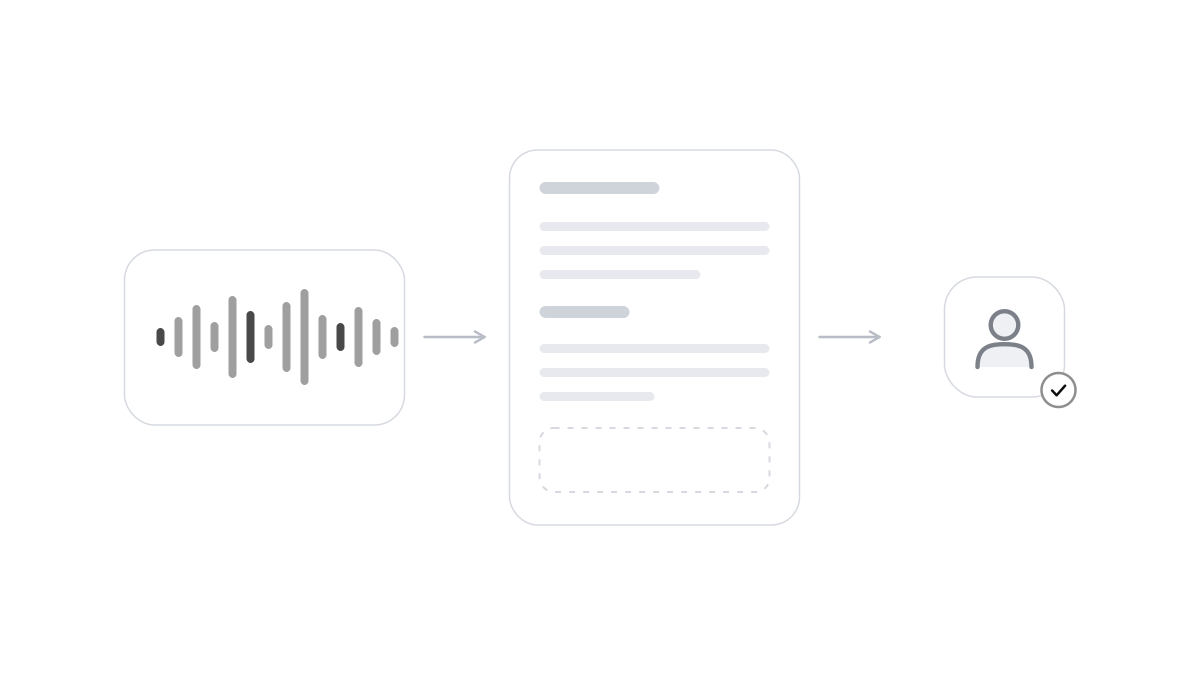
After the visit, the doctor dictates her notes, much as she always has. The difference is what happens next. Instead of starting from a blank page, she gets a first draft of the clinical note, and a referral if needed, laid out according to the centre’s own templates.
The draft is exactly that. The doctor reads it, corrects what needs correcting and adds what is missing. She is responsible for the text, just as before. But reviewing and adjusting is a very different task from writing everything from scratch, especially late in the afternoon when the queue is still long.
The templates make a real difference. When drafts follow the centre’s own structure, notes become more consistent, and referrals contain what the recipient expects to find. That helps the next colleague who reads the record, and whoever receives the referral.
Answers from the centre’s own routines
A primary care centre has a lot of routines. How a particular sample is taken, what applies to a certain type of appointment, how incidents are reported, who is responsible for what. They live in handbooks and documents that are hard to find when time is short.
With an assistant, a nurse, assistant nurse or doctor can ask the question in plain words and get an answer from the centre’s own documents. Beneath the answer are the documents it is based on, so she can open the routine and read it herself before acting. An answer without a source is not good enough in healthcare, and it does not have to be.
It shows most for people who are new. A newly hired nurse or a locum doctor unfamiliar with how the centre works gets the same answer as someone who has been there for years. Colleagues are not interrupted with the same questions, and routines are followed the same way whoever is on duty.
Not every question is clinical. Staff also wonder about schedules, leave and administrative routines. An assistant connected to the staff handbook can answer those too, giving the practice manager more time for everything else.
In your pocket, but never out of the building
Much of the work at a primary care centre happens away from the desk. That is why the assistant is on mobile as well, so staff can get answers between rooms or on the way to a home visit.
All of this depends on patient data staying where it belongs. It never leaves the centre’s environment. The whole chain can run in your own environment, every customer gets its own installation, and the data is never used to train models. We describe how the security works in detail in the article on secure AI in healthcare.
That means staff can use the tool fully, without having to wonder what is all right to type in.
How it works in iSearch
iSearch is used in healthcare today. The doctor dictates after the visit and gets draft clinical notes and referrals from the organisation’s own templates, and reviews and remains responsible for the text. Staff get answers from the centre’s routines and handbooks, with the source visible, on desktop and mobile.
Patient data stays in your own environment, where the whole chain can run. Every customer gets a separate installation of its own, and your data is never used to train models.
See how iSearch is used in healthcare, read more about security or book a walkthrough.
Want to see how it would work for you?
We’ll show you iSearch with your own documents.