Why sources make AI answers trustworthy
A good answer is not enough. You also need to see where it comes from. With a source, you can open the document and read the passage the answer is based on.
 iSearch
Contents
An AI answer can be well written, confident in tone and completely wrong. It is not a flaw that shows on the surface. That is why it is not enough for an answer to sound right. Whoever reads it needs to see where it came from.
That is what sources do. They turn an answer from something you have to believe into something you can check.
Why an answer without a source is not enough
A language model writes text that sounds plausible. Usually it is also correct, especially when it has the right material. But the model has no built-in sense of when it knows something and when it is guessing. If the material is missing, it can fill the gap itself, in the same confident tone.
In many settings that is a problem. A customer service agent giving the wrong answer about terms. A case handler following a routine that no longer applies. A nurse checking a reference value. In each case the wording is not what matters. What matters is that the information is right, and that you can show why.
An answer without a source leaves the user with two poor choices. Either she trusts it blindly, or she looks up the answer herself and has saved no time at all.
What a good source does
A good source points to the documents the answer is based on, so the user can open them straight away. It makes it possible to read the passage in context and judge whether the answer has interpreted it correctly. It takes a few seconds, and it is often all that is needed to feel confident.
The source shows something else, almost as important. It makes it clear when the material is thin. If the assistant finds no relevant document, that should be visible rather than hidden behind a well-phrased answer. Better to learn that the answer is missing than to receive one that was made up.
Over time, the way people use the tool changes too. When they know they can always check, they are more willing to trust it. That is not because the tool is never wrong, but because they can see which document every answer comes from.
This matters most when the answer is passed on. A reply to a customer, material for a decision or text in a record needs to stand on its own. With the source at hand, staff can answer the follow-up question of why, without searching all over again.
Sources start with the right material
Sources are only as good as the documents they point to. If the material contains old versions and conflicting routines, the sources will show it. That can feel uncomfortable, but it is an asset. It becomes clear which documents need updating.
That is why it makes sense to give every collection of documents an owner and to let the assistant answer from current material. Then the sources point to what actually applies, and people learn that what they find can be trusted.
How it works in iSearch
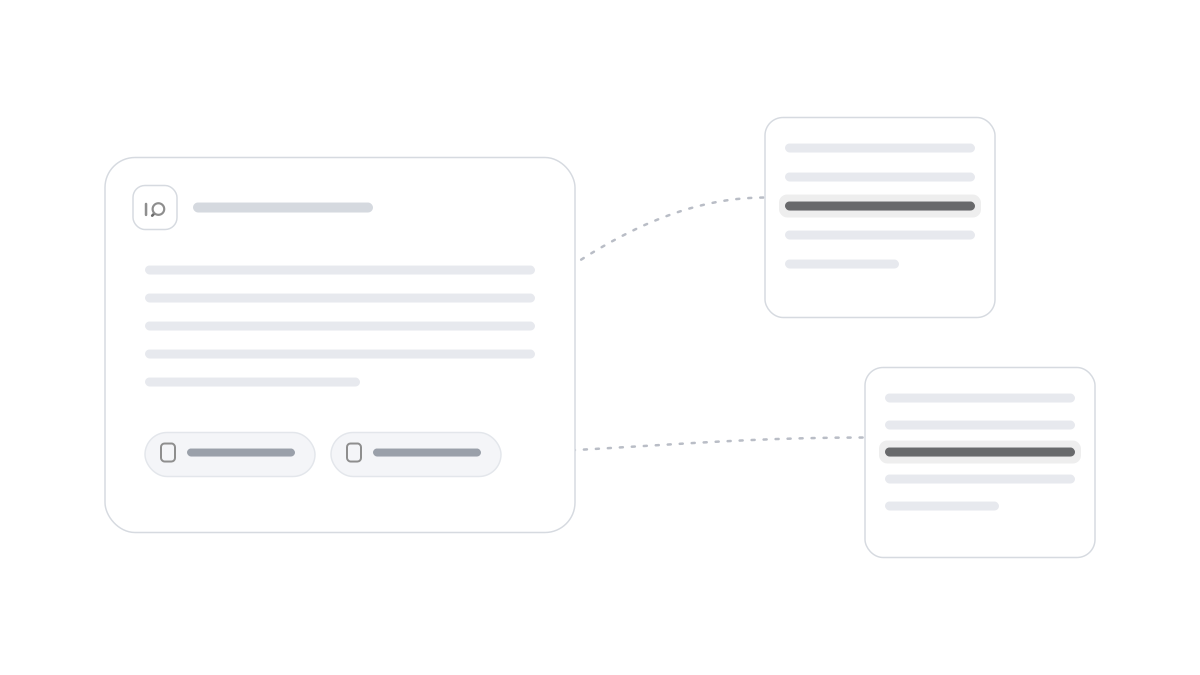
In iSearch, every answer shows which documents were read. The user can open the source directly and see the passage in context. The assistant answers from your own knowledge banks, and you choose which material each assistant may use.
The whole chain can run in your own environment, the language model included, and your data is never used to train models.
See how the product works, read more about security or book a walkthrough.
Want to see how it would work for you?
We’ll show you iSearch with your own documents.